
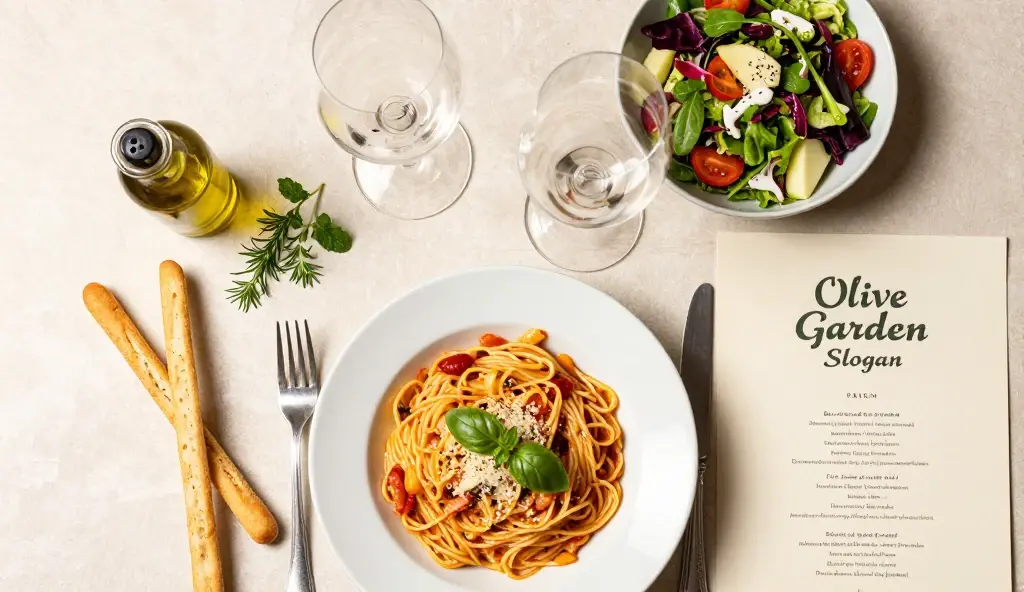
Few restaurant taglines have become as recognizable as the famous Olive Garden slogan, “When You’re Here, You’re Family.” Even people who have not visited the restaurant recently can usually remember the words, the warm tone, and the promise behind them.
That memorability did not happen by accident. The slogan transformed an ordinary restaurant visit into an emotional experience built around generosity, belonging, comfort, and shared meals.
Rather than focusing only on pasta or Italian-American food, Olive Garden positioned itself as a welcoming place where guests could relax and feel included.
Although the company has used different advertising phrases over the years, family remains central to its brand identity. Olive Garden’s current official pages still use expressions such as “We’re All Family Here,” promote family-style dining, and describe the restaurant as a place for memorable experiences with people who matter most.
Its July 2026 homepage also features temporary “Never Ending” campaign language connected to current promotions.
This guide examines the slogan’s meaning, history, marketing psychology, cultural influence, and relevance within 2026 restaurant trends.
What Is the Olive Garden Slogan?
The most famous Olive Garden slogan is “When You’re Here, You’re Family.” It remains the phrase most strongly associated with the restaurant, even though Olive Garden has used updated taglines and promotional messages since formally retiring it from national advertising in 2012.
- 🍝 The classic Olive Garden slogan is “When You’re Here, You’re Family.”
- 👨👩👧👦 It presents the restaurant as a welcoming place for shared meals.
- ❤️ The message emphasizes emotional connection rather than individual menu items.
- 🏡 It suggests that guests should feel comfortable, accepted, and cared for.
- 🫶 The word “family” creates an immediate sense of belonging.
- 🍞 The promise complements Olive Garden’s generous breadstick and first-course traditions.
- 🥗 It connects naturally with family-style dining and shareable food.
- 🗣️ The sentence sounds conversational instead of overly promotional.
- ✨ Its simplicity makes it easy to remember and repeat.
- 🎯 The slogan communicates Olive Garden’s brand position in only five words.
- 📺 Years of television advertising helped embed it in American culture.
- 🧠 Its emotional language gives it stronger recall than a product-focused phrase.
- 🍽️ The line sells a dining atmosphere, not merely Italian-American food.
- 🤝 It implies hospitality before customers even enter the restaurant.
- 🌿 The message supports Olive Garden’s approachable, casual personality.
- 📱 People continue searching for the phrase long after its original campaign ended.
- 🔍 It is commonly described as a slogan, tagline, motto, or advertising catchphrase.
- 🏷️ Current campaigns may change, but the family association remains recognizable.
- ✅ The clearest answer is that “When You’re Here, You’re Family” is Olive Garden’s iconic slogan.
The Exact Meaning of “When You’re Here, You’re Family”
At its core, the slogan means that Olive Garden wants customers to feel like more than paying guests. The restaurant is promising warmth, generosity, acceptance, and attentive service—the qualities people often associate with a comfortable family meal.
- 🏠 “Here” represents the restaurant as a temporary home-like environment.
- 👥 “You” speaks directly to every individual customer.
- 🤗 “Family” communicates acceptance without requiring an existing relationship.
- 🍲 The phrase implies that food will be served with generosity.
- 💬 Its direct wording creates a personal conversation between brand and customer.
- 🪑 The message encourages guests to settle in rather than rush.
- 🎉 It positions the restaurant as suitable for celebrations and reunions.
- 🥂 The slogan supports birthday dinners, anniversaries, and group occasions.
- 👶 It reassures parents that children and multigenerational groups are welcome.
- 🧓 It appeals to older guests who value traditional hospitality.
- 💞 It replaces transactional language with relationship-based language.
- 🌎 The idea of sharing food with loved ones is widely understood across cultures.
- 🍝 It associates Italian-American dining with abundance and togetherness.
- 🔥 The emotional promise feels warmer than a slogan about low prices alone.
- 🫂 It tells solo diners and groups that they will be treated with care.
- 🌟 The wording turns ordinary service expectations into a meaningful experience.
- 🎭 It creates a brand personality that feels friendly rather than formal.
- 🧭 The slogan gives employees a simple hospitality principle to follow.
- ✅ Ultimately, it means every guest should feel welcomed, included, and well looked after.
Is “When You’re Here, You’re Family” Still Used in 2026?
The famous line is no longer consistently presented as Olive Garden’s primary national advertising slogan. However, its central idea remains active in the company’s language, workplace branding, location pages, customer experience, and family-style positioning.
Official Olive Garden employment pages currently use “We’re All Family Here,” while the restaurant website continues emphasizing family dining and memorable experiences with people who matter most.
- 📅 The original phrase remains historically associated with Olive Garden in 2026.
- 🏷️ It should not automatically be treated as every current campaign’s official headline.
- 👨👩👧👦 The broader family concept remains part of the company’s identity.
- 💼 Career pages repeatedly state, “We’re All Family Here.”
- 📍 Some official location pages also display family-oriented wording.
- 🍽️ The main website describes Olive Garden as a family-style dining destination.
- 🏡 Customer-facing copy still emphasizes gathering with people who matter.
- 📢 Seasonal campaigns may use entirely different promotional lines.
- ♾️ July 2026 marketing prominently uses “Never Ending” language.
- 🍝 That campaign connects to Olive Garden’s revived pasta promotions.
- 🔄 Promotional copy can change without replacing the underlying brand promise.
- 🧠 Consumers often remember the classic slogan more strongly than newer lines.
- 🎬 Old advertisements continue circulating through videos, memories, and memes.
- 🔍 Search interest still centers on “When You’re Here, You’re Family.”
- ✍️ Writers should distinguish between “famous slogan” and “current campaign.”
- ⚖️ Saying it is Olive Garden’s iconic slogan is accurate and clear.
- 🚫 Saying it appears in every 2026 advertisement would be misleading.
- 🌿 The family theme has survived even as individual taglines have evolved.
- ✅ In 2026, the line remains culturally alive even when it is not the primary campaign headline.
The Complete Olive Garden Slogan Timeline
Olive Garden’s slogan history reflects the company’s changing priorities. Early advertising highlighted specific products, the famous family campaign emphasized emotional hospitality, and later campaigns attempted to modernize the brand or promote particular dining occasions.
The company formally announced “Go Olive Garden” in October 2012 after the family slogan’s reported 14-year national run.
- 🗓️ Olive Garden opened its first restaurant in 1982.
- 🥗 Early marketing concentrated heavily on salad and casual enjoyment.
- 📣 “Good Times, Great Salad, Olive Garden” became an early advertising phrase.
- 🌿 That wording emphasized a recognizable menu benefit.
- 🔄 The brand later shifted from product language toward emotional positioning.
- 👨👩👧👦 “When You’re Here, You’re Family” emerged during the late 1990s.
- 🏡 The phrase helped turn hospitality into the central brand promise.
- 📺 It ran through years of highly visible national television advertising.
- 🧠 Repetition made the wording culturally recognizable.
- ⏳ Reports described the slogan as having a 14-year run.
- 📢 In October 2012, Olive Garden announced “Go Olive Garden.”
- 🚀 The replacement was designed to sound more active and contemporary.
- 🍽️ The 2012 campaign also promoted menu variety and new dining offers.
- 🤝 Family language later returned in the form “We’re All Family Here.”
- 💼 That wording became especially visible in employment and team communications.
- 📍 It also appears on portions of Olive Garden’s current web presence.
- ♾️ “Never Ending” became a powerful promotional platform for pasta and first courses.
- 📱 Modern campaigns are increasingly offer-driven, digital, and adaptable.
- ✅ Throughout these changes, generosity and togetherness have remained consistent themes.
How “Good Times, Great Salad, Olive Garden” Started the Story
Before Olive Garden became famous for family-centered advertising, an early slogan reportedly focused on one of its most recognizable offerings: salad. “Good Times, Great Salad, Olive Garden” followed a traditional restaurant-marketing formula by combining an emotional benefit with a specific product.
- 🥗 The line placed salad at the center of the restaurant’s identity.
- 🎉 “Good Times” promised enjoyment beyond the food itself.
- 🌿 “Great Salad” gave customers a concrete reason to visit.
- 🏷️ Ending with “Olive Garden” strengthened brand-name recognition.
- 🎵 The wording had a rhythmic, jingle-friendly structure.
- 📺 Its short phrases worked well in traditional television commercials.
- 🍽️ It reflected an era when restaurant slogans often featured signature products.
- 💡 The message was easy to understand without additional explanation.
- 👥 “Good Times” suggested social meals with friends and relatives.
- 💰 Salad also supported the perception of generous value.
- 🔁 Repetition of the hard “g” sound improved memorability.
- 📣 The line functioned effectively as a classic food slogan.
- 🧠 Customers could quickly connect the restaurant with a familiar menu item.
- 🌱 The garden-related imagery fit naturally with salad.
- 🛒 Product-focused wording could motivate immediate purchase consideration.
- ⚠️ However, it limited the message to one part of the dining experience.
- 🍝 Olive Garden’s growing menu required a broader emotional position.
- 🔄 The later family slogan expanded the brand beyond any single dish.
- ✅ This early phrase created the foundation for Olive Garden’s accessible, social image.
The line is widely documented in histories of the company’s advertising, although Olive Garden’s present official pages focus more strongly on family-style dining and Italian generosity.
Why “When You’re Here, You’re Family” Became Iconic
Many food slogans are memorable for a few years and then disappear. The Olive Garden slogan endured because it expressed a human truth: sharing food can make people feel connected. The phrase was emotional, simple, adaptable, and closely aligned with the restaurant experience.
- ❤️ The slogan appealed to emotion before logic.
- 👨👩👧👦 Family is a universally recognizable concept.
- 🏡 The phrase transformed a commercial space into a symbolic home.
- 🗣️ It sounded like something a welcoming host might genuinely say.
- 🍝 Shared pasta dishes naturally reinforced the communal message.
- 🍞 Refillable breadsticks conveyed generosity and abundance.
- 🥗 shared first courses made the table feel collaborative.
- 📺 Long-term advertising repetition strengthened recall.
- 🎶 Its natural speaking rhythm made it easy to quote.
- 🧠 The line created a vivid mental image of comfort and togetherness.
- 🤝 It made the brand feel relational rather than corporate.
- 🌿 The promise matched Olive Garden’s relaxed, accessible atmosphere.
- 🎂 It suited birthdays, graduations, anniversaries, and family gatherings.
- 💬 Customers could use the phrase jokingly in everyday conversations.
- 🎭 Its sincerity also made it adaptable for humor and parody.
- 🪄 The wording was broad enough to remain meaningful across generations.
- 📱 Its emotional simplicity translates well into social-media culture.
- 🏷️ The phrase became stronger than many temporary promotional offers.
- ✅ It became iconic because customers remembered how the words made them feel.
What Happened When Olive Garden Introduced “Go Olive Garden”
In October 2012, Olive Garden announced “Go Olive Garden” as part of its first major national advertising campaign in nearly a decade. The new message accompanied menu changes, lighter dishes, wine offerings, and promotions designed to attract a broader range of guests.
- 🚀 “Go Olive Garden” used an energetic call-to-action structure.
- 📢 It directly encouraged customers to visit the restaurant.
- 🧭 The word “go” suggested movement, spontaneity, and modern lifestyles.
- ✂️ It was considerably shorter than the previous family slogan.
- 📱 The concise structure suited increasingly fragmented media environments.
- 🍽️ The campaign attempted to broaden Olive Garden’s dining occasions.
- 🥗 New menu options were promoted alongside the advertising change.
- 🍷 Signature wine offerings formed part of the repositioning effort.
- 💰 Value-oriented meal deals also supported the campaign.
- 🕒 The brand wanted to appeal to customers with changing schedules.
- 🎯 The slogan emphasized action more than emotional belonging.
- 🧠 It was simple, but simplicity alone did not guarantee affection.
- 💬 Some commentators considered it less distinctive than the family line.
- 🏷️ The wording could have belonged to almost any destination brand.
- ❤️ It lacked the emotional ownership of “When You’re Here, You’re Family.”
- 🔄 The change demonstrated the risks involved in replacing a beloved tagline.
- 📚 It became a useful case study in restaurant rebranding.
- 🌿 Family language eventually remained more persistent in brand communications.
- ✅ “Go Olive Garden” modernized the invitation but could not erase the older slogan’s cultural influence.
How “We’re All Family Here” Extends the Brand Promise
“We’re All Family Here” preserves the most valuable word from the famous slogan while making the message more inclusive. Instead of describing what happens when one customer arrives, it describes the collective culture Olive Garden wants guests and employees to experience.
- 👥 “We’re” creates a sense of shared identity.
- 🌎 “All” broadens the message beyond traditional family structures.
- ❤️ “Family” preserves Olive Garden’s most recognizable emotional association.
- 📍 “Here” anchors the promise inside the restaurant environment.
- 🤝 The wording includes employees as well as customers.
- 💼 It works especially well in recruitment and workplace communication.
- 🫶 The phrase signals acceptance, support, and cooperation.
- 🏡 It maintains the home-away-from-home positioning.
- 🍽️ The line still complements family-style meals and shared courses.
- 🗣️ Its conversational language remains easy to repeat.
- 🌿 It feels like an evolution rather than a complete rejection of the past.
- 🔄 The statement can function across customer service and employee culture.
- 🧠 Familiar vocabulary activates memories of the original slogan.
- 🎯 It communicates internal values more clearly than “Go Olive Garden.”
- 👫 The word “all” strengthens inclusivity.
- 📣 It can appear in job listings without sounding like a conventional advertisement.
- 🪢 The line connects multiple generations of Olive Garden messaging.
- 💚 Current official employment pages repeatedly use the expression.
- ✅ It demonstrates how a brand can refresh a slogan without abandoning its emotional foundation.
Official Olive Garden career pages describe family in terms of acceptance, support, strength, teamwork, and care for guests.
Olive Garden Slogan vs. Tagline, Motto, and Campaign Line
People frequently use “slogan,” “tagline,” “motto,” and “campaign line” interchangeably. In professional branding, however, the terms can describe slightly different functions. Understanding the distinction helps explain why Olive Garden can have a famous slogan while using different promotional headlines in 2026.
- 🏷️ A tagline summarizes a brand’s long-term identity or promise.
- 📢 A slogan may support the entire brand or a particular campaign.
- 🧭 A motto usually expresses a guiding belief or principle.
- 🎬 A campaign line promotes a specific offer, season, or advertising idea.
- 👨👩👧👦 “When You’re Here, You’re Family” functions primarily as an iconic brand tagline.
- 🤝 “We’re All Family Here” operates as both cultural language and a brand promise.
- 🚀 “Go Olive Garden” served as a national campaign tagline.
- ♾️ “Never Ending” wording supports major promotional platforms.
- 🍝 “Never-Ending Pasta Bowl” is a product and promotional identity.
- 🥗 Menu headlines are not automatically corporate slogans.
- 📱 Social-media captions may be temporary rather than official taglines.
- 🎯 A strong tagline should remain meaningful beyond one discount.
- 💰 Promotional slogans often emphasize price, urgency, or abundance.
- ❤️ Brand taglines usually communicate a deeper emotional benefit.
- 🧠 Consumers may continue using an old tagline after advertising changes.
- 🔄 Companies can operate with several layers of messaging at once.
- ✍️ Writers should identify which kind of phrase they are discussing.
- 🔍 Searchers using “Olive Garden slogan” usually want the famous family line.
- ✅ The safest distinction is iconic tagline, current family language, and temporary campaign message.
The Psychology Behind the Family Message
The Olive Garden slogan works because it addresses basic emotional needs surrounding belonging, familiarity, and social connection. Customers are not simply choosing pasta; they are selecting an environment where they hope to feel comfortable and enjoy time with others.
- 🧠 Familiar language reduces uncertainty around the dining experience.
- ❤️ Belonging is a powerful emotional motivation.
- 🏡 Home-related associations can make a restaurant feel safer and warmer.
- 🤗 Inclusive language lowers the psychological distance between brand and guest.
- 👥 Family imagery encourages group dining.
- 🎂 Group occasions can generate stronger memories than routine purchases.
- 🍽️ Shared food creates natural opportunities for conversation.
- 🔁 Positive experiences reinforce the slogan’s credibility.
- 🗣️ Direct second-person language makes the promise feel personal.
- 🌿 Simple words require little mental effort to understand.
- 🪞 Customers can project their own definition of family onto the phrase.
- 😊 Warm messaging can increase positive expectations before service begins.
- 🫂 Emotional promises are remembered differently from feature lists.
- 🥂 The slogan links Olive Garden with meaningful life moments.
- 🎭 Humor and parody can extend awareness without destroying recognition.
- 📖 The phrase gives the restaurant a story customers can retell.
- 🔗 Consistent service connects advertising language with lived experience.
- ⚠️ Poor service can feel especially disappointing when the promise is emotional.
- ✅ The psychology succeeds when warmth, value, and hospitality support the words.
How the Menu Makes the Slogan Believable
A restaurant slogan becomes credible only when the food and service experience support it. Olive Garden’s family positioning is reinforced by generous first courses, familiar Italian-American dishes, customizable pasta, family-style meals, take-home offers, and food designed for sharing.
- 🍞 Breadsticks create an immediate sense of abundance.
- 🥗 Shared salad encourages interaction around the table.
- 🍲 Soup offers warmth and comfort associated with home cooking.
- 🍝 Pasta is familiar, accessible, and easy to enjoy in groups.
- 🧀 Rich sauces contribute to the idea of indulgent comfort food.
- 👨👩👧👦 Family-style pans make the group promise physically visible.
- 📦 Take-home offers extend the meal beyond the restaurant visit.
- 🔄 Refillable courses communicate ongoing generosity.
- 🥄 Customizable pasta gives guests control over their meals.
- 🎂 Large portions can suit celebrations and shared occasions.
- 🍗 Familiar proteins make the menu approachable to broad audiences.
- 🌿 Salad and lighter options give groups more flexibility.
- 👶 Kid-friendly choices help support multigenerational dining.
- 🥡 Pickup and delivery allow families to recreate the experience at home.
- 💰 Bundles connect emotional hospitality with practical value.
- 🍽️ Table service creates more personal contact than self-service formats.
- 📱 Online ordering extends brand convenience into digital channels.
- ♾️ “Never Ending” promotions strengthen the perception of abundance.
- ✅ The menu supports the slogan by making generosity something customers can experience.
Olive Garden’s official website currently promotes family-style meals, customizable pasta, take-home entrées, pickup, delivery, catering, and never-ending first courses.
How Restaurant Service Supports the Family Positioning
Employees are responsible for turning Olive Garden’s advertising promise into a believable experience. Warm greetings, attentive refills, menu guidance, patience with groups, and thoughtful handling of celebrations all influence whether guests actually feel welcomed.
- 👋 A friendly greeting establishes warmth immediately.
- 🪑 Comfortable seating helps groups settle into the experience.
- 💬 Clear explanations reduce confusion about menu choices.
- 🥗 Timely first courses create an early sense of generosity.
- 🍞 Attentive breadstick refills reinforce abundance.
- 🥤 Consistent drink service demonstrates care.
- 👶 Patience with children supports the family-friendly promise.
- 🧓 Respectful assistance helps older guests feel comfortable.
- 🎂 Recognizing celebrations makes visits more memorable.
- 🧾 Transparent pricing protects customer trust.
- 🥡 Accurate take-home packaging extends hospitality beyond the table.
- 📦 Reliable pickup service supports busy households.
- 🤝 Thoughtful problem-solving can recover a disappointing experience.
- 🧼 Clean dining areas communicate respect for guests.
- 🕒 Reasonable pacing helps customers feel relaxed rather than rushed.
- 🍝 Knowledgeable recommendations create confidence.
- ❤️ Genuine warmth makes branded language feel authentic.
- 💼 Supportive employee culture can improve guest interactions.
- ✅ The slogan succeeds when every operational detail communicates welcome and care.
Why the Olive Garden Slogan Became Part of Pop Culture
“When You’re Here, You’re Family” became more than advertising language because people could quote, parody, remix, and apply it outside the restaurant. Its emotional sincerity made it memorable, while its familiar structure made it useful for comedy and online conversation.
- 📺 Years of television exposure created widespread recognition.
- 🎙️ The line was easy for comedians and hosts to reference.
- 😂 Its earnest tone made it naturally adaptable for parody.
- 📱 Social-media users could apply the wording to unrelated situations.
- 🧩 The sentence structure is easy to remix with replacement words.
- 🧠 People remember it even when they forget specific commercials.
- 🎬 Old advertisements continue circulating online.
- 👨👩👧👦 The family concept is instantly understandable without context.
- 🗣️ The phrase sounds natural when spoken aloud.
- 🎭 Both sincere and sarcastic interpretations remain possible.
- 🍝 Breadstick jokes often revive awareness of the slogan.
- 🏡 The promise has become shorthand for Olive Garden’s entire experience.
- 🌎 International audiences can understand the basic emotional idea.
- 🔁 Memes give discontinued slogans a longer cultural life.
- ✍️ Copywriters frequently study it as an example of emotional positioning.
- 📚 Marketing discussions use it to illustrate brand memory.
- 💡 Its cultural endurance shows that awareness can outlast media spending.
- 🎁 Olive Garden publicly shared its former tagline during a 2013 appearance involving Jimmy Fallon.
- ✅ Pop-culture recognition keeps the slogan relevant to younger audiences.
Olive Garden’s official video described the expression as its former tagline while welcoming Jimmy Fallon and his audience into the brand’s “family.”
What the Slogan Reveals About Olive Garden’s Target Audience
The Olive Garden slogan appeals to a broad audience rather than a narrow culinary niche. Its language is designed for parents, couples, friends, older adults, children, celebration groups, value-conscious diners, and anyone seeking familiar food in a comfortable environment.
- 👨👩👧👦 Families are a central audience for the restaurant.
- 💑 Couples can interpret the message as warmth and comfort.
- 🎓 Graduation groups fit naturally within the celebration positioning.
- 🎂 Birthday parties reinforce the shared-meal experience.
- 🧓 Older guests may appreciate familiarity and table service.
- 👶 Parents benefit from an approachable environment for children.
- 👥 Friends can define themselves as chosen family.
- 🧑💼 Coworkers can gather for relaxed group meals.
- 🥡 Busy households can use pickup and family bundles.
- 💰 Value-conscious guests respond to abundance and combination offers.
- 🍝 Comfort-food seekers appreciate familiar pasta dishes.
- 🌿 Less adventurous diners may prefer recognizable menu choices.
- 📱 Digitally oriented customers can order through online channels.
- 🎉 Occasion diners value an environment suitable for milestones.
- 🗺️ Travelers often choose recognizable national restaurant brands.
- 🤝 Inclusive wording avoids limiting family to one household type.
- 🏡 Home-style emotional language creates broad accessibility.
- 🧠 The slogan avoids culinary terminology that could alienate new diners.
- ✅ Its audience is anyone seeking dependable food, generous hospitality, and connection.
How 2026 Restaurant Trends Strengthen the Message
Restaurant consumers in 2026 are balancing cost consciousness with a continued desire to dine out. Industry research highlights value, memorable experiences, flexible ordering channels, and emotional satisfaction as important decision factors—all areas that complement Olive Garden’s established positioning.
- 💰 Value remains a central concern for restaurant customers in 2026.
- 🍽️ Diners still want experiences that feel worth leaving home for.
- 🤝 Time together can be part of the value customers receive.
- 📱 Digital ordering must feel convenient without weakening hospitality.
- 🥡 Takeout increasingly functions as a normal dining occasion.
- 👨👩👧👦 Family bundles serve customers seeking convenience and connection.
- 🎉 Experience-driven dining makes emotional brand promises more important.
- 🧠 Familiar brands can reduce decision fatigue.
- ❤️ Comfort and nostalgia can strengthen customer loyalty.
- 🍝 Recognizable dishes provide reassurance during uncertain economic periods.
- ♾️ Abundance-focused promotions communicate measurable value.
- 🎫 Limited passes and seasonal events create urgency.
- 🔄 Returning promotions use nostalgia while generating fresh attention.
- 📣 Social conversation can turn a value offer into brand entertainment.
- 🥗 Menu flexibility matters as health and portion preferences change.
- 📦 Off-premise experiences must remain consistent with the brand promise.
- 🪄 Emotional differentiation helps restaurants avoid competing only on price.
- 🌿 Olive Garden’s family message combines comfort, experience, and value.
- ✅ In 2026, the slogan’s underlying idea remains aligned with consumer priorities.
The National Restaurant Association projects U.S. restaurant sales of approximately $1.55 trillion in 2026 while noting continued consumer desire to dine out as budgets allow. McKinsey and OpenTable similarly identify value, pricing, channel choices, and worthwhile experiences as influential themes. Olive Garden’s 2026 Pasta Pass revival also demonstrates the strength of value, scarcity, nostalgia, and customer enthusiasm.
How the Olive Garden Slogan Compares With Modern Restaurant Branding
Modern restaurant marketing often emphasizes price, speed, customization, authenticity, convenience, or digital rewards. The Olive Garden slogan follows a different path by centering the emotional outcome of dining rather than a technical product advantage.
- ❤️ Olive Garden emphasizes belonging instead of speed.
- 👨👩👧👦 The message focuses on people rather than ingredients.
- 🏡 It sells comfort instead of exclusivity.
- 🍝 The slogan leaves room for many menu categories.
- 🤝 Emotional positioning can survive individual product changes.
- 📱 Modern digital campaigns often focus on immediate offers.
- 💰 Value slogans commonly highlight prices or quantities.
- ⚡ Quick-service brands frequently promise convenience.
- 🌿 Premium restaurants may emphasize craft or authenticity.
- 🥗 Wellness concepts often foreground freshness or nutrition.
- 🧠 Olive Garden’s wording occupies a distinctive emotional territory.
- 🎯 A broad promise helps the brand reach multiple generations.
- 🪄 The phrase can support both dine-in and take-home experiences.
- 🔄 New promotions can operate beneath the larger family identity.
- 📢 Offer-driven advertising may generate faster short-term action.
- 🏷️ Emotional taglines generally build deeper long-term recognition.
- ⚖️ Effective branding needs both emotional meaning and practical proof.
- 📚 Olive Garden shows why a human benefit can outperform a menu description.
- ✅ Its differentiation comes from making hospitality the primary product.
Lessons Brands Can Learn When Creating a Food Slogan
The Olive Garden slogan provides practical lessons for restaurants, cafés, food companies, caterers, and delivery brands. A memorable food slogan should communicate a distinctive promise, sound natural when spoken, and accurately reflect the experience customers receive.
- 🎯 Begin with one clear brand promise.
- ❤️ Identify the emotion customers should feel.
- 🍽️ Look beyond ingredients to the complete dining experience.
- 🗣️ Use language people would naturally say.
- ✂️ Remove unnecessary words.
- 🧠 Choose vocabulary that is easy to remember.
- 🎵 Test the rhythm by reading the line aloud.
- 🏷️ Make sure the wording belongs specifically to your brand.
- 🚫 Avoid generic claims such as “best food” without supporting meaning.
- 🤝 Connect the slogan with real service behaviors.
- 🍝 Ensure the menu can prove the promise.
- 👥 Consider the audience and dining occasion.
- 🌎 Use inclusive language when targeting broad communities.
- 📱 Check that the phrase works on digital and physical media.
- 🔍 Research whether similar slogans are already widely used.
- ⚖️ Review trademark and legal considerations before launching.
- 🔄 Give strong messaging enough time to build recognition.
- 📊 Measure recall, customer interpretation, and purchase response.
- ✅ A successful food slogan should be simple, believable, emotional, and distinctive.
Frequently Asked Questions About the Olive Garden Slogan
These concise answers address the most common search questions about Olive Garden’s famous family tagline, its history, and its current use. They are written to provide clear answers for readers, voice searches, and featured-snippet results.
- ❓ What is the famous Olive Garden slogan?
The famous slogan is “When You’re Here, You’re Family.” - ❓ What is Olive Garden’s slogan in 2026?
Its iconic slogan remains the family line, while current official language includes “We’re All Family Here” and temporary campaign messages. - ❓ Does Olive Garden still say “When You’re Here, You’re Family”?
It is not consistently used as the main national campaign, but it remains strongly associated with the brand. - ❓ When did Olive Garden introduce its family slogan?
The phrase is generally associated with Olive Garden’s late-1990s rebranding and reportedly ran nationally for about 14 years. - ❓ When did Olive Garden stop using the famous slogan?
The company announced a replacement campaign in October 2012. - ❓ What replaced “When You’re Here, You’re Family”?
The 2012 national campaign introduced “Go Olive Garden.” - ❓ What does the Olive Garden slogan mean?
It means guests should feel welcomed, comfortable, included, and cared for like family. - ❓ What was Olive Garden’s original slogan?
An early advertising line was “Good Times, Great Salad, Olive Garden.” - ❓ Is “We’re All Family Here” an Olive Garden slogan?
Yes. It is current official brand language used prominently on Olive Garden employment pages. - ❓ Why is the Olive Garden slogan so memorable?
It is short, emotional, conversational, and connected to a relatable human need for belonging. - ❓ What makes the Olive Garden slogan a strong food slogan?
It communicates an emotional dining benefit instead of merely listing food products.
Conclusion:
The Olive Garden slogan continues to attract interest because it communicates something larger than pasta, salad, or breadsticks. “When You’re Here, You’re Family” turns a restaurant visit into a promise of warmth, generosity, comfort, and human connection.

Logan Matthews is a marketing enthusiast from Austin, Texas, passionate about helping startups build strong brand identities through impactful slogans.