
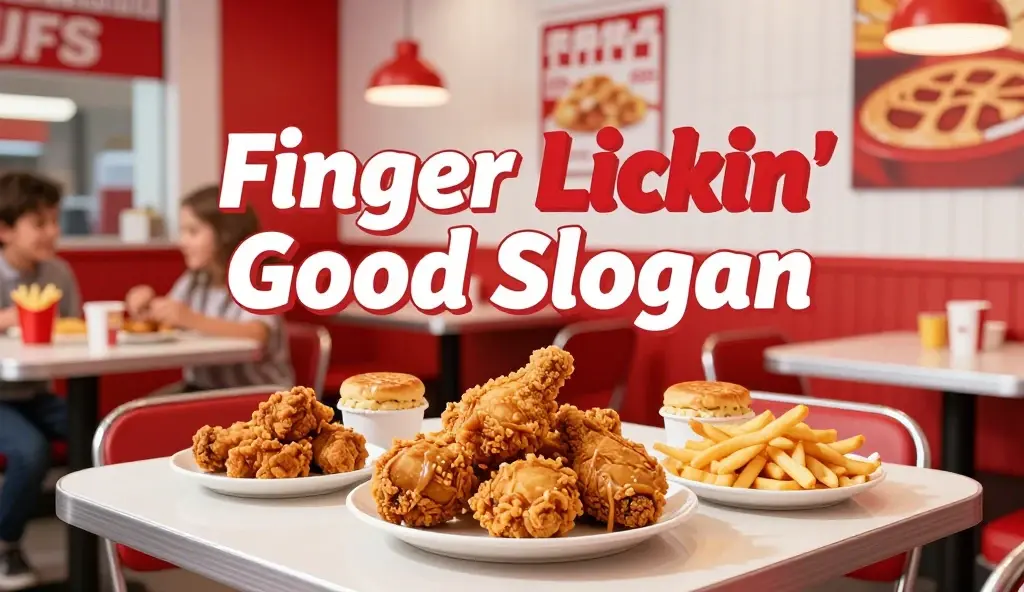
Few advertising lines have remained recognizable for generations, but the Finger Lickin’ Good slogan has achieved exactly that. The phrase does more than describe enjoyable fried chicken.
It captures a physical reaction, creates an immediate picture in the customer’s mind, and communicates satisfaction without relying on complicated marketing language.
For business owners, copywriters, food bloggers, and branding professionals, this famous food slogan provides a valuable lesson: the strongest marketing messages often express a genuine customer experience rather than making an exaggerated corporate claim.
However, the slogan’s story is not simply about clever wording. It involves decades of advertising, changing consumer expectations, cultural adaptation, trademark protection, public-health sensitivity, and a major 2026 brand evolution.
This guide explains what “Finger Lickin’ Good” means, where it came from, why it became memorable, how KFC has adapted it, and what modern businesses can learn from it.
Whether you are researching KFC’s branding or developing your own restaurant tagline, the principles behind this legendary phrase remain surprisingly relevant.
What Does the Finger Lickin’ Good Slogan Mean?
The Finger Lickin’ Good slogan describes food that tastes so enjoyable that a person wants to lick the remaining flavor from their fingers. It is intentionally informal, visual, and emotionally expressive. Instead of listing ingredients or cooking techniques, this memorable food slogan communicates the pleasurable result of eating the product.
- 🍗 Literal meaning: The chicken tastes good enough to make diners lick seasoning from their fingers.
- 😋 Emotional meaning: The phrase represents complete enjoyment, satisfaction, and irresistible flavor.
- 👋 Physical imagery: Listeners can immediately imagine eating crispy chicken with their hands.
- 🧠 Mental association: The slogan connects KFC with indulgence before the customer sees the food.
- 🎯 Product promise: It suggests that the meal will deliver a deeply satisfying taste experience.
- 🗣️ Conversational wording: The phrase sounds like something a happy customer might naturally say.
- ✂️ Informal spelling: “Lickin’” feels friendlier and more approachable than the formal word “licking.”
- ✅ Confident tone: The word “it’s” presents deliciousness as a certainty rather than a possibility.
- 🌟 Simple adjective: “Good” is universal, understandable, and free from unnecessary advertising jargon.
- 🍽️ Customer-centered message: The statement focuses on how people experience the food.
- 🔥 Craveability signal: It implies that no drop of flavor should be left behind.
- 🏠 Familiar atmosphere: The language resembles relaxed family dining rather than luxury restaurant copy.
- ❤️ Positive emotion: The phrase connects the brand with comfort, pleasure, and rewarding meals.
- 📣 Clear food slogan: Consumers understand the central message within seconds.
- 🤲 Handheld-food connection: The wording works naturally with fried chicken eaten without utensils.
- 👃 Sensory suggestion: It encourages people to imagine aroma, texture, seasoning, and taste together.
- 🎬 Visual storytelling: Advertisements can demonstrate the slogan without lengthy explanations.
- 🔁 Repeatable language: Its rhythm makes it easy to say, remember, quote, and imitate.
- 💡 Central interpretation: KFC chicken is presented as so delicious that ordinary table manners become secondary.
Who Owns the Finger Lickin’ Good Slogan?
The phrase is strongly associated with KFC and protected through trademarks connected with KFC Corporation. Trademark records cover the wording in relation to restaurant services, prepared chicken, packaging, and related food products. That protection matters because a famous food slogan can become one of a company’s most valuable brand assets.
- 🏢 Brand owner: The slogan is commercially associated with KFC Corporation.
- ⚖️ Trademark protection: Registered marks help prevent confusing commercial imitation.
- 🍗 Food coverage: Trademark records connect the phrase with prepared chicken and related menu items.
- 🏪 Service coverage: Protection may also apply to restaurant and food-service activities.
- 📦 Packaging relevance: The wording has appeared on buckets, boxes, signs, and branded materials.
- 🌍 International value: A global food slogan may require separate protection across different jurisdictions.
- 🧾 Registration importance: Trademark registration creates stronger evidence of commercial ownership.
- 🛡️ Consumer protection: Legal protection reduces the risk of customers confusing unrelated restaurants with KFC.
- 🧠 Mental ownership: Most consumers connect the expression with KFC even without seeing its logo.
- 🎨 Brand-asset status: The slogan functions alongside Colonel Sanders, red-and-white branding, and the bucket.
- 📢 Advertising use: KFC can deploy the phrase across television, outdoor media, digital campaigns, and packaging.
- 💻 Online protection: Famous wording may also be monitored in domain names, advertisements, and commercial content.
- 🚫 Copying risk: Businesses should not use a confusingly similar slogan for competing chicken products.
- 📝 Originality requirement: New restaurant owners should develop distinctive wording rather than imitate KFC.
- 🔍 Clearance searches: A proposed food slogan should be checked before investment in signs and packaging.
- 👩⚖️ Legal guidance: Trademark professionals can assess availability, classes, and geographic protection.
- 💰 Commercial value: Recognition built over decades can make a slogan financially significant.
- 🔄 Continued usage: Consistent commercial use helps preserve the relationship between a phrase and its owner.
- 📌 Practical lesson: Treat a successful slogan as intellectual property, not disposable campaign copy.
The Origin and Early History of Finger Lickin’ Good
KFC stated in 2020 that its famous slogan had already been used for 64 years, placing its emergence in the mid-1950s. Historical accounts commonly connect the wording with early franchise advertising, although details about the exact individual who first spoke or formalized it vary between sources.
- 🕰️ Mid-century beginning: The phrase developed during the early growth of Kentucky Fried Chicken.
- 📺 Television influence: Local restaurant commercials helped turn an informal expression into advertising language.
- 🍗 Visible eating: Early food advertising showed people enjoying chicken in a natural, hands-on manner.
- ☎️ Customer reaction: Common origin stories involve a viewer questioning finger licking in an advertisement.
- 💬 Spontaneous response: The food was reportedly defended as being “finger lickin’ good.”
- 🧑🍳 Franchise involvement: Early franchise operators played an important role in KFC’s branding development.
- 📍 Local beginnings: The phrase appears to have gained momentum before becoming a standardized global message.
- 📣 Company adoption: KFC eventually incorporated the wording into wider brand communications.
- 🪧 Signage potential: Its brevity made it suitable for restaurant signs and printed advertisements.
- 📻 Audio strength: The rhythm also worked effectively in radio announcements and spoken commercials.
- 📰 Print flexibility: The food slogan could support photographs without requiring detailed explanatory copy.
- 🔁 Repeated exposure: Consistent advertising gradually created strong public recognition.
- 👨👩👧👦 Family-market fit: Its relaxed language matched the accessible positioning of fried chicken meals.
- 🇺🇸 American vernacular: The shortened “lickin’” reflected casual spoken English.
- 🤠 Colonel connection: The folksy wording complemented the public personality surrounding Colonel Sanders.
- 🪣 Bucket association: As KFC’s bucket became recognizable, the slogan reinforced the expected taste inside it.
- 🌎 International expansion: The expression traveled with the brand into new markets.
- 📚 Advertising history: It became an example of a phrase outlasting the campaign that first introduced it.
- 💡 Origin lesson: Authentic customer language can sometimes outperform slogans created through complicated processes.
Why the Slogan Became One of Advertising’s Most Memorable Lines
Many restaurant taglines disappear after a few campaigns because they are generic or tied to short-term promotions. Finger Lickin’ Good survived because it combines a clear product category, a vivid behavior, a positive judgment, and an unmistakable brand association. It makes the customer feel the message rather than merely read it.
- 🧠 Instant visualization: People picture a diner licking flavorful seasoning from their fingers.
- 👅 Taste implication: The slogan stimulates thoughts about flavor without describing a specific ingredient.
- 🔊 Pleasant rhythm: Its sequence of short words feels smooth and natural when spoken aloud.
- 🔤 Sound repetition: The repeated “i” sounds give the phrase an informal musical quality.
- ✨ Distinctiveness: Few competing restaurant slogans describe such a specific physical response.
- 🍗 Category relevance: Finger licking naturally fits fried chicken and other handheld comfort foods.
- 🎯 Single-minded message: The line communicates deliciousness without adding price, speed, or convenience claims.
- 💭 Memory trigger: The unusual image makes the wording easier to recall than a generic quality statement.
- ❤️ Emotional warmth: It suggests carefree enjoyment rather than formal dining behavior.
- 🤝 Customer authenticity: The food slogan sounds like praise from a diner, not corporate self-congratulation.
- 🌍 Broad understanding: The central idea can be understood across ages and many cultures.
- 🪧 Design efficiency: Four core words can fit comfortably on packaging, posters, menus, and screens.
- 🎥 Demonstration value: Actors can show the message through eating behavior.
- 😂 Humor potential: The phrase can be exaggerated, hidden, interrupted, or creatively reinterpreted.
- 🔄 Campaign flexibility: It supports product launches without losing the main brand promise.
- 🏆 Long-term consistency: Repeated use has strengthened its association with KFC.
- 🧩 Brand integration: It works with chicken imagery, the bucket, the Colonel, and KFC’s tone.
- 📱 Shareability: The wording is compact enough for captions, hashtags, GIFs, and short videos.
- 📌 Memorability lesson: A strong food slogan gives consumers a picture, feeling, and promise simultaneously.
The Language and Copywriting Structure Behind the Phrase
The Finger Lickin’ Good slogan appears effortless, but its wording demonstrates several valuable copywriting principles. Every word contributes to the message. The line begins with a confident statement, introduces a recognizable behavior, and ends with the simplest possible positive evaluation. Nothing feels technical, artificial, or overexplained.
- ✍️ Economical construction: The phrase communicates a complete idea with very few words.
- ✅ Declarative opening: “It’s” immediately frames the statement as a confident conclusion.
- 👆 Concrete noun: “Finger” creates a visible object rather than an abstract idea.
- 👅 Action language: “Lickin’” transforms the customer from observer into participant.
- 👍 Positive ending: “Good” closes the phrase with an uncomplicated benefit.
- 🗣️ Colloquial voice: The missing final “g” makes the wording sound conversational.
- 🎵 Natural cadence: The stressed syllables make the phrase easy to deliver in commercials.
- 🔁 Phonetic unity: Similar vowel sounds help connect the words.
- 🧠 Low reading effort: Consumers do not need specialist vocabulary to understand the food slogan.
- 🍽️ Sensory verb: “Lickin’” is more vivid than words such as “enjoying” or “appreciating.”
- 🎯 Benefit focus: The message emphasizes the eating experience rather than company history.
- 🪞 Observable proof: A person licking their fingers visually demonstrates the claim.
- 🤲 Human scale: The slogan describes a small, familiar moment instead of making a grand promise.
- 📣 Spoken effectiveness: It sounds natural when customers repeat it to one another.
- 🧲 Curiosity value: The behavior is slightly improper, which makes the line more attention-grabbing.
- 🧡 Emotional informality: It gives audiences permission to enjoy food without pretension.
- 🌟 Accessible adjective: “Good” leaves room for consumers to supply their own sensory expectations.
- 📝 Copywriting discipline: Removing any core word weakens the phrase’s rhythm or meaning.
- 💡 Writing lesson: A memorable food slogan often depends on strong verbs and recognizable human behavior.
How Sensory Branding Makes the Slogan Powerful
Food cannot be tasted through a screen, billboard, or radio advertisement. Effective food marketing therefore uses language and imagery to recreate sensations in the consumer’s imagination. Finger Lickin’ Good succeeds because it turns an invisible quality—flavor—into a behavior audiences can see, hear, and mentally experience.
- 👅 Taste activation: The phrase encourages audiences to imagine savory seasoning and lingering flavor.
- 👃 Aroma association: Thoughts of hot fried chicken often trigger imagined smells.
- 👂 Sound imagery: Consumers may mentally hear crispy coating breaking with each bite.
- 👀 Visual stimulation: Glossy chicken, textured breading, and seasoned fingers reinforce the message.
- ✋ Touch connection: The food slogan reminds people of holding warm, crispy chicken.
- 🔥 Temperature expectation: Freshness is suggested through images of hot food and steam.
- 💥 Texture promise: “Finger lickin’” implies seasoning, sauce, or flavorful residue.
- 🧂 Flavor depth: The wording allows consumers to imagine saltiness, spice, richness, and savoriness.
- 🪣 Packaging cue: Opening a recognizable bucket can become part of the sensory ritual.
- 😋 Facial expression: Smiles and satisfied reactions provide nonverbal evidence of enjoyment.
- 🎥 Close-up effectiveness: Food photography can show crunch, moisture, sauce, and seasoning.
- 🎙️ Audio advertising: Frying sounds and crunch effects support the verbal promise.
- 🌶️ Product variation: Spicy, saucy, and original recipes can all fit beneath the same message.
- 🤲 Participation: The phrase suggests active eating rather than passive product observation.
- 💭 Anticipation: Sensory imagination can create desire before purchase.
- 🧠 Memory encoding: Multi-sensory ideas are often easier to recall than abstract claims.
- ❤️ Comfort association: Warm, familiar flavors can connect the food slogan with emotional memories.
- 📱 Digital relevance: Slow-motion pulls, dips, crunches, and close-ups translate well to short-form video.
- 📌 Branding lesson: Describe the customer’s sensory response when the product itself cannot be sampled.
The Consumer Psychology Behind Finger Lickin’ Good
Consumers rarely select meals through logic alone. Hunger, memory, habit, comfort, social context, and anticipated pleasure all influence food decisions. This slogan works psychologically because it makes the expected reward feel immediate. It does not ask audiences to analyze KFC; it invites them to imagine enjoying it.
- 🧠 Mental simulation: Consumers picture themselves performing the action described.
- 🍗 Anticipated reward: Imagining delicious food creates motivation before the first bite.
- 😌 Comfort response: The phrase feels familiar, relaxed, and emotionally undemanding.
- 🏠 Nostalgia potential: Long-term customers may connect it with childhood or family meals.
- 🤤 Craving reinforcement: Sensory wording can intensify existing hunger.
- 👥 Social proof feeling: The statement sounds like an observation shared by satisfied diners.
- ✅ Reduced uncertainty: A confident food slogan reassures customers about expected enjoyment.
- 🎉 Permission to indulge: The informal tone frames eating as a pleasurable break.
- 😄 Positive mood: Humor and exaggeration make the message emotionally lighter.
- 🔁 Familiarity effect: Repeated exposure increases recognition and comfort.
- 🪝 Behavioral hook: Finger licking is a more memorable cue than an abstract quality claim.
- 🧩 Association building: The phrase repeatedly connects KFC’s name with satisfying flavor.
- 🎯 Simple decision support: Consumers can process the promise quickly during meal selection.
- 📸 Experience expectation: The slogan suggests a meal worth talking about or sharing.
- 🤝 Trust through consistency: A stable message can create reassurance across generations.
- 🥳 Celebratory meaning: Buckets and shared chicken often fit parties, gatherings, and informal occasions.
- 💬 Word-of-mouth readiness: Customers can easily repeat the phrase in everyday conversation.
- 🌟 Identity expression: Choosing indulgent comfort food can reflect mood and personal preference.
- 📌 Psychology lesson: Strong food marketing helps customers imagine the reward before purchasing it.
How the Slogan Supports KFC’s Brand Identity
A successful slogan should not operate separately from the business it represents. Finger Lickin’ Good supports KFC’s broader identity by reinforcing chicken, flavor, informality, indulgence, hospitality, and recognizable visual assets. It acts as a verbal shortcut to the entire brand experience.
- 🍗 Product alignment: The wording directly supports KFC’s core fried-chicken offering.
- 👨🍳 Colonel connection: Its folksy character complements the heritage associated with Colonel Sanders.
- 🪣 Bucket compatibility: The food slogan works naturally beside KFC’s most recognizable packaging format.
- 🔴 Visual reinforcement: Red-and-white branding adds energy and familiarity to the verbal message.
- 🧂 Recipe association: Flavor language supports KFC’s emphasis on its secret blend of herbs and spices.
- 🤲 Informal dining: The phrase matches food commonly eaten with the hands.
- 👨👩👧👦 Sharing occasions: Buckets and meal bundles connect the brand with groups and families.
- 😋 Indulgent positioning: The slogan emphasizes pleasure rather than restraint.
- 🗣️ Playful voice: Informal spelling contributes to an approachable personality.
- 🌍 Global consistency: The core idea can support a recognizable identity across many markets.
- 🏪 Restaurant experience: Packaging, menu photography, aroma, and service can reinforce the same promise.
- 📺 Advertising continuity: Different campaigns can change while the central flavor message remains familiar.
- 📱 Digital adaptability: The phrase fits applications, social posts, delivery platforms, and video content.
- 🎨 Creative flexibility: Designers can obscure, reveal, animate, or visually demonstrate the words.
- 🤝 Customer relationship: The language feels shared between the brand and its fans.
- 🔄 Product-extension support: Tenders, wings, sandwiches, and sauces can inherit the same flavor ethos.
- 📣 Recognition shortcut: The line can evoke KFC even when other brand elements are limited.
- 💎 Distinctive asset: Decades of repetition have made the wording more than an ordinary campaign tagline.
- 📌 Identity lesson: The best food slogan strengthens what customers already recognize about the brand.
How Product Experience Supports the Advertising Promise
An effective slogan cannot permanently compensate for disappointing food. It becomes credible only when the product, preparation, packaging, service, and customer experience support the promise. KFC’s UK materials continue to connect its finger-licking language with Original Recipe chicken and its blend of 11 herbs and spices.
- 🍗 Taste consistency: Customers expect familiar seasoning whenever they order a signature product.
- 🔥 Freshness: Hot, recently prepared chicken strengthens the promise of satisfying flavor.
- 💥 Texture: Crisp coating and juicy meat help make the food slogan believable.
- 🧂 Seasoning coverage: Flavor on the coating creates the literal finger-licking idea.
- 🥫 Sauce compatibility: Dips and glazes extend the sensory experience described by the phrase.
- 📦 Protective packaging: Good packaging should preserve heat, structure, and visual appeal.
- 🪣 Presentation: The bucket creates recognition before customers taste the food.
- ⏱️ Operational accuracy: Correct orders and reasonable service times influence overall satisfaction.
- 😊 Hospitality: Friendly interactions can reinforce the positive emotion promised in advertising.
- 🧼 Cleanliness: A comfortable, well-maintained environment supports brand trust.
- 🚗 Delivery quality: Food arriving warm and intact matters increasingly in off-premise dining.
- 📱 Ordering usability: A smooth digital experience reduces frustration before consumption.
- 📸 Expectation matching: Menu photography should resemble the product customers actually receive.
- 🧑🍳 Preparation standards: Consistent cooking processes protect the brand’s core taste.
- 🌶️ Flavor choice: Different spice levels and sauces let customers personalize enjoyment.
- 💬 Feedback response: Customer criticism can identify gaps between the slogan and reality.
- 🔄 Quality improvement: Operations must evolve while preserving recognizable product characteristics.
- 🤝 Promise delivery: Every touchpoint affects whether customers believe the food slogan.
- 📌 Business lesson: Advertising creates the expectation, but the complete experience earns repeat purchases.
How the Slogan Evolved Across Different Eras
Long-running slogans rarely appear with exactly the same prominence in every market or campaign. KFC has used additional messages over time, but Finger Lickin’ Good has continued to function as a recognizable expression of the brand’s flavor promise. Its longevity comes from adaptation rather than rigid repetition.
- 🕰️ Early adoption: The slogan emerged while the restaurant franchise was expanding.
- 📺 Broadcast era: Television advertising helped the phrase reach mass audiences.
- 📰 Print era: Posters and newspaper advertisements paired the wording with food photography.
- 🪧 Restaurant visibility: Signs and packaging made the food slogan part of the purchase experience.
- 🌍 International expansion: New markets adapted the central idea to local language and culture.
- 🎭 Creative variation: Advertisers changed stories and characters while preserving the flavor message.
- 🔄 Periodic reduction: Some campaigns emphasized other taglines or product messages.
- 🧠 Residual recognition: Consumers continued connecting the phrase with KFC during quieter periods.
- 📦 Packaging role: Buckets and boxes maintained the link between words and food.
- 😂 Humorous treatment: The slogan became material for jokes, parodies, and self-aware advertising.
- 🎬 Cinematic execution: Modern ads could communicate the idea visually without repeating it constantly.
- 📱 Social adaptation: Short captions, GIFs, memes, and reactions expanded its digital usefulness.
- 🛍️ Merchandising: Iconic wording can appear on collectibles and branded apparel.
- 🌶️ Menu expansion: The message stretched from bone-in chicken to tenders, wings, and sandwiches.
- 🥤 Occasion expansion: Modern KFC aims to serve snacks, drinks, and smaller indulgent moments.
- 🎨 Visual refreshes: Logos, packaging, and restaurant designs have evolved around recognizable assets.
- 👥 Audience renewal: Each generation encounters the slogan through different media.
- 🧱 Heritage function: It gives newer campaigns a stable historical foundation.
- 📌 Evolution lesson: A durable food slogan can remain consistent in meaning while changing in execution.
Why KFC Temporarily Paused the Slogan in 2020
In August 2020, KFC officially paused use of “It’s Finger Lickin’ Good” in global advertising because the behavior described did not fit public-health guidance during the COVID-19 pandemic. KFC openly acknowledged the conflict while emphasizing that the pause was temporary.
- 🦠 Public-health context: Touching the face conflicted with widespread hygiene messaging.
- ✋ Behavioral concern: Finger licking no longer felt harmless within pandemic communication.
- 🌍 Global relevance: The issue affected advertising across multiple countries.
- ⏸️ Temporary decision: KFC paused the slogan rather than permanently abandoning it.
- 🗣️ Transparent explanation: The company directly admitted that its wording felt inappropriate.
- 😂 Self-aware humor: KFC framed the situation playfully without ignoring its seriousness.
- 🛡️ Reputation protection: Pausing the food slogan reduced the risk of appearing irresponsible.
- 🤝 Audience sensitivity: The decision acknowledged changing customer emotions and expectations.
- 🧠 Context awareness: Words can acquire different implications when social circumstances change.
- 📣 Communication timing: A familiar message may need reconsideration during a crisis.
- 🔄 Brand flexibility: KFC adapted without changing its central product identity.
- 🍗 Product continuity: The company stressed that the chicken itself was not changing.
- 🧱 Asset preservation: The slogan’s historical value was protected for future use.
- 📰 Media attention: The unusual pause generated extensive conversation about the phrase.
- 🎨 Creative opportunity: Blank or obscured slogan treatments allowed the brand to remain recognizable.
- 👥 Public participation: Temporary alternatives and jokes invited audience engagement.
- ⚖️ Tone balance: The campaign combined responsibility with KFC’s established personality.
- 📚 Marketing case study: The decision became an example of situational brand management.
- 📌 Crisis lesson: A powerful food slogan must never be treated as more important than public context.
What the Slogan’s Return Reveals About Brand Resilience
KFC later revived the familiar wording after its temporary pause. The return worked because the company had clearly described the suspension as temporary, allowing the phrase to retain its emotional and commercial value. The episode showed that a strong brand asset can survive interruption when decisions are transparent and contextually appropriate.
- 🔁 Recognition survived: Consumers did not forget the phrase during its absence.
- 🧠 Strong memory structure: Decades of exposure had already established deep association.
- 💬 Public conversation: Discussion of the pause actually reminded audiences of the slogan.
- ⏳ Temporary framing: KFC avoided suggesting that the message had lost all value.
- 🤝 Trust preservation: The decision appeared responsive rather than defensive.
- 😂 Humorous continuity: Playful campaigns maintained the brand’s familiar voice.
- 🍗 Product stability: Customers could still connect the food with its established taste promise.
- 📣 Earned attention: The return generated interest without introducing an unfamiliar concept.
- 🧱 Heritage strength: Long-standing assets can recover more easily than short-lived campaign lines.
- 🎨 Creative reinvention: Returning language can be presented in fresh visual forms.
- 📱 Digital discussion: Social reactions helped reactivate the food slogan.
- 🌍 Cultural flexibility: Different markets could restore the wording at appropriate times.
- 🎯 Message clarity: The central meaning remained understandable after the crisis period.
- 🛡️ Brand resilience: Temporary adaptation did not destroy long-term identity.
- 💡 Strategic patience: Waiting for better context protected the slogan’s future usefulness.
- 🪞 Audience familiarity: Customers welcomed a phrase they already knew.
- 🔄 Adaptive consistency: KFC changed its behavior while preserving its character.
- 📚 Brand-management lesson: Flexibility can strengthen rather than weaken an iconic asset.
- 📌 Resilience lesson: A memorable food slogan can withstand interruption when the underlying promise remains relevant.
The Role of Finger Lickin’ Good in KFC’s 2026 Brand Strategy
In June 2026, KFC announced a global evolution involving new boneless products, more than 20 sauces, expanded beverages, refreshed branding, and next-generation restaurant formats. Although the experience is being modernized, KFC explicitly described its visual identity as remaining grounded in the Colonel and its “Finger Lickin’ Good” ethos.
- 🌍 Global scale: KFC reported more than 34,000 restaurants across over 150 countries in 2026.
- 🍗 Chicken focus: The modern strategy continues to place craveable chicken at the center.
- 🤲 Boneless growth: Tenders support convenient dipping, snacking, and personalized eating occasions.
- 🥫 Sauce expansion: A global pantry of more than 20 sauces encourages flavor exploration.
- 💦 Dipped products: Customers can combine crispy chicken with sauces according to personal preference.
- 🌊 Dunked products: Fully sauced items create a more immersive, indulgent experience.
- 🌶️ Bold flavors: Options such as Hot Honey Habanero reflect demand for adventurous combinations.
- 🌿 Global inspiration: Internationally influenced sauces allow familiar food to feel new.
- 🥤 Beverage innovation: KWENCH by KFC expands the brand into refreshers, coffees, lemonades, and shakes.
- 🕒 More occasions: KFC aims to serve snacks, drinks, treats, and meals throughout the day.
- 🎨 Refreshed identity: Packaging, advertising, and digital touchpoints are receiving updated branding.
- 🪣 Bucket modernization: The iconic bucket remains central while gaining renewed visual energy.
- 👨🍳 Colonel evolution: Colonel Sanders continues to anchor the brand’s heritage.
- 🏪 Restaurant redesign: New formats emphasize hospitality alongside efficiency and convenience.
- 📍 Physical innovation: Next-generation concepts are planned for locations including Texas and Dubai.
- 📱 Digital consistency: The updated identity is intended to work across screens and ordering experiences.
- 😋 Craveability trend: Sensory flavor and customization increasingly influence modern food marketing.
- 🔗 Heritage connection: The classic food slogan provides continuity during major change.
- 📌 2026 lesson: Modernization is strongest when innovation remains connected to recognizable brand meaning.
Finger Lickin’ Good Compared With Other Famous Food Slogans
A useful way to understand KFC’s phrase is to compare its structure with other restaurant and packaged-food taglines. Many successful slogans emphasize freshness, happiness, choice, convenience, or superiority. Finger Lickin’ Good stands apart because it focuses on a physical reaction caused by the product.
- 🍗 KFC: The slogan converts flavor into a visible customer behavior.
- 🍔 Burger messaging: Many burger slogans emphasize customization, size, or personal choice.
- 🍕 Pizza messaging: Pizza taglines often focus on delivery, sharing, cheese, or convenience.
- 🥪 Freshness messaging: Sandwich brands frequently position ingredients as fresh or individually selected.
- ☕ Coffee messaging: Coffee slogans often sell energy, routine, comfort, or personal moments.
- 🥤 Beverage messaging: Drink brands commonly emphasize refreshment, happiness, youth, or social connection.
- 🍫 Confectionery messaging: Chocolate campaigns usually promise indulgence, reward, or escape.
- 🥣 Breakfast messaging: Cereal slogans may focus on energy, health, family, or childhood fun.
- 🍟 Fast-food messaging: Many competitors communicate speed, value, affordability, or broad menu choice.
- 👅 Sensory advantage: KFC’s food slogan centers specifically on taste satisfaction.
- 👋 Behavioral distinction: The action gives the line greater visual specificity.
- 🗣️ Informal difference: “Lickin’” creates more personality than polished corporate language.
- 🎯 Narrow promise: It avoids trying to represent every possible restaurant benefit.
- ❤️ Emotional familiarity: The expression resembles personal praise rather than an official claim.
- 🧠 Recall strength: Specific actions are often easier to remember than abstract adjectives.
- 🎥 Demonstration potential: The message can be communicated through a single close-up eating scene.
- 🔄 Product flexibility: Different chicken products can still generate the same satisfying reaction.
- 🏆 Competitive value: Distinctiveness makes direct imitation risky and strategically weak.
- 📌 Comparison lesson: The strongest food slogan occupies a verbal territory competitors cannot easily claim.
How the Slogan Works in Social Media and Short-Form Video
Digital platforms reward content that communicates quickly, creates sensory curiosity, and encourages reaction. Finger Lickin’ Good is naturally suited to this environment because the phrase can be shown through close-ups, crunch sounds, sauces, facial reactions, and playful customer behavior without lengthy narration.
- 📱 Fast comprehension: Viewers understand the message within the opening seconds.
- 🎥 Close-up power: Crispy textures and juicy interiors support appetite appeal.
- 🎧 Crunch audio: Sound can make the food slogan feel almost physically experienced.
- 🥫 Dipping scenes: Sauce movement creates visual satisfaction and product customization.
- 🌊 Dunking content: Fully coated chicken provides dramatic short-form imagery.
- 🔥 Steam shots: Heat signals freshness and immediate serving.
- 😋 Reaction videos: Facial expressions demonstrate enjoyment more credibly than descriptive copy.
- 👋 Hand interaction: Holding and dipping food creates movement within vertical video.
- 🔁 Loop potential: Bites, sauce pulls, and crunches can be edited into seamless repeats.
- 😂 Meme flexibility: The familiar phrase supports humor, exaggeration, and cultural references.
- 💬 Comment prompts: Brands can ask followers which flavor deserves the food slogan.
- 🗳️ Poll opportunities: Audiences can vote for sauces, spice levels, or menu combinations.
- 👥 Creator partnerships: Influencers can interpret the phrase through authentic tasting content.
- 🧑🍳 Behind-the-scenes value: Preparation footage supports product credibility and craftsmanship.
- 📍 Local content: Individual restaurants can feature teams, customers, and regional menu choices.
- 🏷️ Caption efficiency: The line works as a concise caption or campaign sign-off.
- 🧠 Recognition advantage: Audiences understand the reference even in highly abbreviated content.
- 🛒 Commerce connection: Sensory videos can lead directly to app orders and delivery pages.
- 📌 Digital lesson: A social-ready food slogan must be easy to see, hear, imitate, and share.
How Global Brands Localize a Famous Food Slogan
A slogan may be globally recognizable, but language and eating behavior do not carry identical meanings everywhere. Successful localization protects the emotional promise rather than translating every word mechanically. For Finger Lickin’ Good, the essential idea is irresistible flavor—not necessarily a word-for-word description of licking fingers.
- 🌍 Meaning first: Translators should preserve the promise of exceptional taste.
- 🗣️ Natural language: The localized line must sound like something real customers would say.
- 📚 Cultural research: Teams should understand local manners, humor, and dining habits.
- 🚫 Literal-translation risk: Direct wording may sound strange or create unintended meanings.
- 👥 Native review: Local linguists and customers should evaluate proposed translations.
- 🍗 Product relevance: The food slogan must fit menu items available in that market.
- 🕌 Cultural sensitivity: Advertising should respect local values and religious considerations.
- 🍽️ Eating conventions: Hand-eating behavior may carry different associations between regions.
- 😂 Humor testing: A playful phrase in one language can sound offensive in another.
- 🔤 Sound quality: Rhythm and pronunciation affect memorability.
- 🪧 Visual length: Translated wording must fit packaging, menus, signs, and mobile screens.
- 🎥 Nonverbal storytelling: Flavor can be demonstrated visually when translation is difficult.
- 🧂 Local taste: Regional sauces and spice preferences can strengthen relevance.
- 🧑🤝🧑 Community insight: Local marketing teams should have meaningful decision-making authority.
- 🔍 Search behavior: Digital wording should reflect how customers actually search for food.
- ⚖️ Legal checking: Trademark availability may differ between countries and languages.
- 🧪 Pre-launch testing: Small audience studies can identify confusion before a national campaign.
- 🔄 Flexible consistency: Markets can adapt execution while preserving the global brand idea.
- 📌 Localization lesson: Translate the emotional experience behind a food slogan, not merely its dictionary words.
What Small Restaurants Can Learn From KFC’s Slogan
Independent restaurants may not have KFC’s advertising budget, but they can apply the same underlying principles. A strong food slogan should express a real advantage, sound natural, suit the menu, and remain believable during every customer interaction. Distinctiveness matters more than sounding like a large corporation.
- 🎯 Choose one promise: Focus on flavor, freshness, hospitality, speed, craftsmanship, or another clear benefit.
- 🍽️ Start with experience: Describe what customers genuinely feel when eating your food.
- 🗣️ Use customer language: Review comments and conversations for authentic phrases.
- ✂️ Keep it concise: Remove words that do not improve meaning or rhythm.
- 🧠 Create imagery: Give people something they can picture, hear, smell, or feel.
- ❤️ Include emotion: A memorable food slogan should express more than a technical feature.
- 🧑🍳 Stay truthful: Do not promise handmade quality if production cannot consistently deliver it.
- 🔍 Study competitors: Avoid phrases already overused within the local market.
- 💎 Build distinctiveness: Your wording should sound connected to your specific restaurant.
- 🏪 Match positioning: A playful line may not suit a formal fine-dining experience.
- 🔊 Read it aloud: Check pronunciation, rhythm, and conversational flow.
- 📱 Test small screens: Ensure the line remains readable on mobile advertisements.
- 📦 Check packaging: Visualize it on cups, boxes, bags, menus, and uniforms.
- 🌍 Review translations: Multilingual markets require culturally natural alternatives.
- ⚖️ Search trademarks: Investigate legal availability before committing resources.
- 🧪 Gather reactions: Ask target customers what the phrase makes them expect.
- 🔄 Allow refinement: Improve weak wording before launching permanent signage.
- 🤝 Train employees: Staff behavior should support the promise expressed in the slogan.
- 📌 Small-business lesson: The best food slogan grows from a distinctive, repeatable customer experience.
How to Create a Memorable Food Slogan in 2026
In 2026, restaurant slogans must function across physical locations, delivery applications, social videos, voice search, packaging, creator content, and AI-assisted discovery. The fundamentals remain unchanged, but modern slogans need greater flexibility. They must be distinctive enough for humans to remember and clear enough for digital systems to understand.
- 🔍 Define search intent: Understand whether customers seek taste, convenience, value, health, or experience.
- 🧭 Clarify positioning: Decide what your restaurant should become known for.
- 👥 Identify the audience: Language for families may differ from language for trend-focused diners.
- 🍗 Name the real strength: Build around an advantage your operation can repeatedly deliver.
- 👅 Use sensory language: Consider flavor, aroma, texture, freshness, heat, and sound.
- 🎬 Imagine the video: A strong food slogan should inspire visual content.
- 🎙️ Test voice search: The words should remain understandable when spoken by customers.
- 📱 Prioritize mobile readability: Short wording performs better on small screens.
- 🤖 Preserve semantic clarity: Avoid cleverness that completely hides the product benefit.
- 🧠 Build memory cues: Rhythm, contrast, repetition, or vivid behavior can improve recall.
- 🗣️ Sound human: Avoid stiff expressions generated from corporate mission statements.
- 🚫 Reject empty superlatives: “Best,” “ultimate,” and “number one” require credibility and evidence.
- 🌍 Plan localization: Consider how the central meaning will travel across languages.
- ⚖️ Check legal availability: Search relevant trademark categories and geographic markets.
- 🧪 Test multiple options: Compare recall, emotion, clarity, and purchase interest.
- 📊 Measure performance: Track branded searches, ad recall, engagement, and conversion.
- 🔄 Use consistently: Repetition across touchpoints builds mental availability.
- 🛠️ Protect product quality: Operational inconsistency will weaken even excellent copy.
- 📌 2026 principle: Create a food slogan that works as language, content, experience, and brand ownership.
Common Mistakes Businesses Make When Writing Restaurant Slogans
Most weak slogans are not grammatically incorrect; they are simply forgettable. They make broad claims, imitate market leaders, or attempt to communicate too many benefits at once. Studying Finger Lickin’ Good helps reveal why specific customer-centered language is usually stronger than generic promotional wording.
- 🚫 Using generic quality claims: “Great food” could describe almost any restaurant.
- 📢 Writing corporate language: Formal mission-statement wording rarely feels emotionally engaging.
- 🧩 Adding too many benefits: Taste, price, speed, service, and health cannot all dominate one line.
- 🪞 Copying competitors: Similar wording prevents the restaurant from developing a unique identity.
- ⚠️ Making unsupported claims: Declaring superiority without proof may reduce trust.
- 📏 Writing excessive length: Customers should not need several seconds to understand a food slogan.
- 🔤 Choosing awkward wording: Difficult pronunciation limits word-of-mouth sharing.
- 😐 Ignoring emotion: Purely descriptive lines may inform without becoming memorable.
- 👀 Lacking imagery: Abstract words do not create a vivid eating experience.
- 🧑🍳 Disconnecting from operations: The staff and product must support the advertised promise.
- 🌍 Forgetting cultural meaning: Innocent expressions may translate badly.
- ⚖️ Skipping trademark checks: Rebranding becomes expensive after legal conflicts.
- 📱 Ignoring digital use: Long phrases may fail in profile images, applications, or video overlays.
- 🎯 Targeting everyone: Broad messaging often becomes bland messaging.
- 🧪 Avoiding customer testing: Internal teams may misunderstand how outsiders interpret a phrase.
- 🔄 Changing too frequently: Constant replacement prevents recognition from developing.
- 💤 Following temporary trends: Trendy wording can become outdated before brand awareness grows.
- 🤖 Accepting unedited AI copy: Automated ideas require human judgment, originality, and legal review.
- 📌 Mistake to avoid: Never choose a food slogan simply because it sounds impressive in a meeting.
Frequently Asked Questions About the Finger Lickin’ Good Slogan
The following answers address common search questions about the slogan’s meaning, ownership, history, punctuation, present-day relevance, and marketing value. They are written for quick understanding and featured-snippet visibility while avoiding unsupported claims about disputed historical details.
- ❓ What company uses the Finger Lickin’ Good slogan?
KFC is the restaurant brand most closely and legally associated with the phrase. - ❓ What does Finger Lickin’ Good mean?
It means food tastes so satisfying that diners want to lick the remaining flavor from their fingers. - ❓ Is the full slogan “It’s Finger Lickin’ Good”?
Yes. “It’s Finger Lickin’ Good” is the widely recognized complete version. - ❓ When was the KFC slogan introduced?
KFC said in 2020 that the slogan had existed for 64 years, placing its introduction around 1956. - ❓ Who invented the Finger Lickin’ Good slogan?
Historical accounts connect it with early franchise advertising, but exact personal attribution varies between retellings. - ❓ Is Finger Lickin’ Good trademarked?
Yes. KFC Corporation has trademark records covering the phrase for food and restaurant-related uses. - ❓ Why did KFC stop using the slogan?
KFC temporarily paused it in 2020 because finger licking conflicted with pandemic hygiene guidance. - ❓ Did KFC permanently remove Finger Lickin’ Good?
No. The company described the pause as temporary and later restored the familiar message. - ❓ Does KFC still use the slogan in 2026?
KFC’s June 2026 global announcement says its evolving identity remains grounded in its “Finger Lickin’ Good” ethos. - ❓ Why is the KFC slogan so memorable?
It combines sensory imagery, simple wording, informal speech, physical behavior, and a clear product benefit. - ❓ What makes a good food slogan?
A good food slogan is concise, distinctive, emotionally appealing, believable, and connected to the customer experience.
Conclusion:
The Finger Lickin’ Good slogan remains an important branding case study because it turns taste into a vivid human reaction. Its wording is short, informal, sensory, and unmistakably connected with KFC. More importantly, it demonstrates how a slogan can preserve heritage while adapting to cultural change, digital media, and modern restaurant trends.

Benjamin Collins is a branding researcher who explores the psychology behind memorable slogans and successful brand identities.