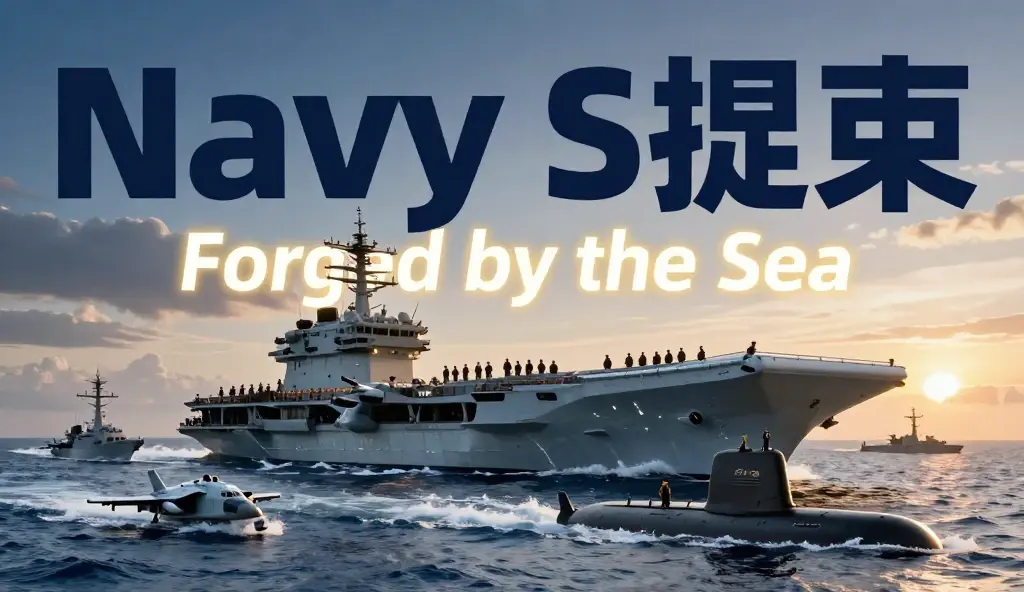
If you’ve ever seen a Navy commercial and felt something shift in your chest that mix of pride, curiosity, and maybe I could do that you already know what a good navy slogan is supposed to do.
It’s not just words on a recruiting poster.
It’s a compressed pitch for an entire way of life, built to grab a scrolling teenager’s attention in under three seconds and still mean something to a 45-year-old veteran who served under a completely different one.
I’ve spent years working alongside branding teams and researching military recruitment campaigns, and the thing that surprises people most is how much strategy sits behind four or five simple words.
A navy slogan isn’t dreamed up in an afternoon. It’s tested, focus-grouped, argued over in Pentagon briefings, and sometimes scrapped entirely when it doesn’t land the way planners hoped.
This guide walks through where these slogans came from, what makes the good ones actually work, and why some naval taglines are still quoted decades after they stopped running on TV.
if you’re researching Navy history, writing a paper, working in marketing, or just chasing a memory of a jingle from your childhood, you’re in the right place.
Why the Navy Puts So Much Weight Behind a Single Slogan
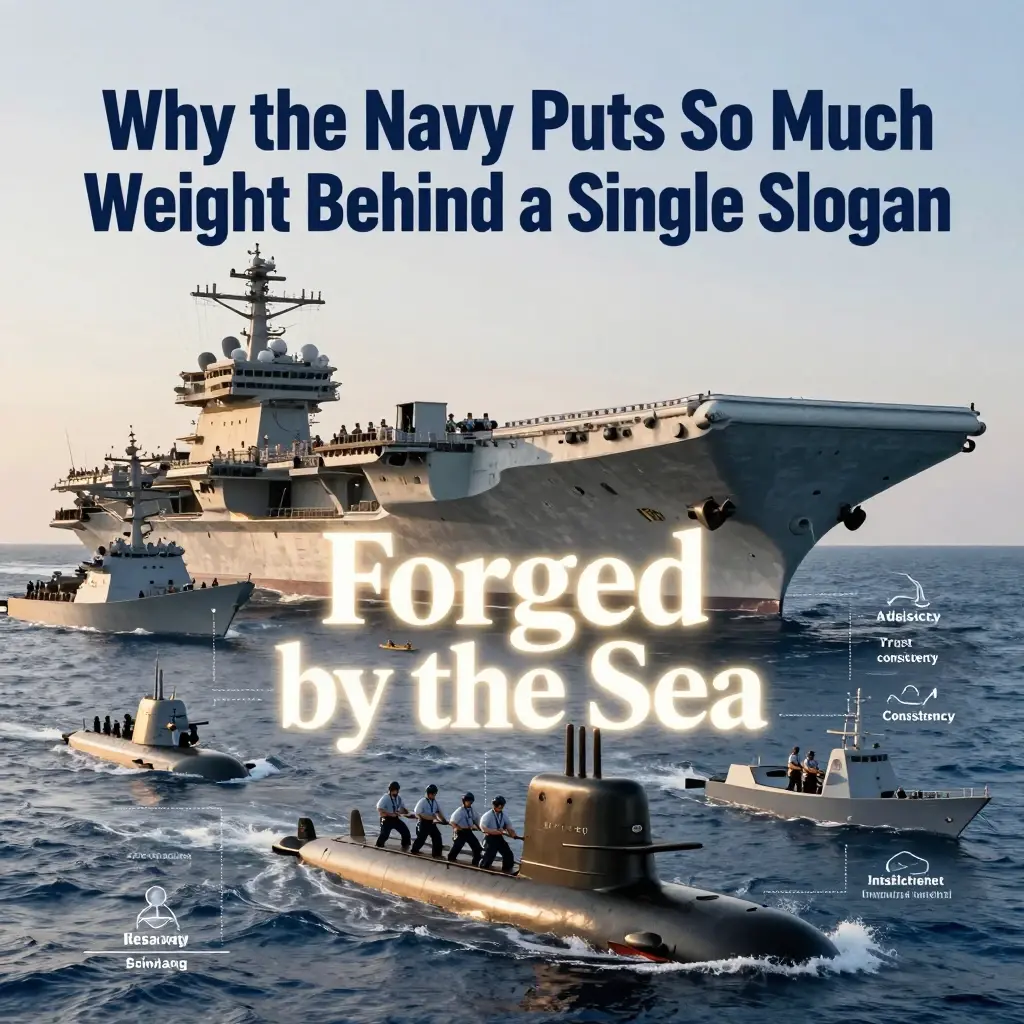
A slogan is the front door to a $20 billion-a-year recruitment effort. Before a single ad airs, planners already know most viewers will forget everything except that one line — so it has to do the heaviest lifting in the whole campaign.
- 🎯 It has to work as a first impression for people who know nothing else about naval service
- 🧠 It needs to be memorable enough to survive months without repetition
- 💬 It becomes the shorthand recruiters use in conversations, brochures, and interviews
- 📉 A weak one can quietly tank an entire recruiting cycle’s numbers
- 🏛️ It has to represent every job in the Navy, not just the combat roles people picture first
- 🎥 It shapes the tone of every commercial, poster, and digital ad built around it
- 🗣️ It gets repeated by veterans and current sailors, becoming part of unit culture
- 🧭 It signals what the Navy currently values most — technology, adventure, purpose, or discipline
- 📊 Leadership tracks it against actual enlistment data, not just likability scores
A Quick Timeline of Official U.S. Navy Slogans
Slogans shift when the Navy’s mission, generation of recruits, or cultural moment shifts. Tracking them side by side shows exactly how the messaging evolved from duty-first language to identity-driven, almost lifestyle-brand phrasing.
- 🚢 “Join the Navy, See the World” — early 20th century, sold adventure and travel above all else
- ⚓ “It’s Not Just a Job, It’s an Adventure” — 1970s-80s, arguably the most quoted Navy line ever
- 🌊 “Let the Journey Begin” — early 1990s, softer and more personal framing
- 🔥 “Accelerate Your Life” — 2000s, aimed squarely at ambitious, career-driven young adults
- 💪 “A Global Force for Good” — mid-2000s to 2010s, tied service to humanitarian identity
- ⚔️ “Forged by the Sea” — 2019 onward, leaned into grit, resilience, and warrior identity
- 🧩 Each shift mirrors a recruiting challenge the Navy was actively trying to solve
- 📅 Slogans typically run 5-10 years before being retired or refreshed
- 🎖️ Some older lines get informally revived in nostalgia campaigns or veteran merchandise
- 🇺🇸 Naval mottos in Latin (like “Non sibi sed patriae” — not for self, but for country) still sit quietly behind the flashier ad slogans
What Made “It’s Not Just a Job, It’s an Adventure” So Unforgettable
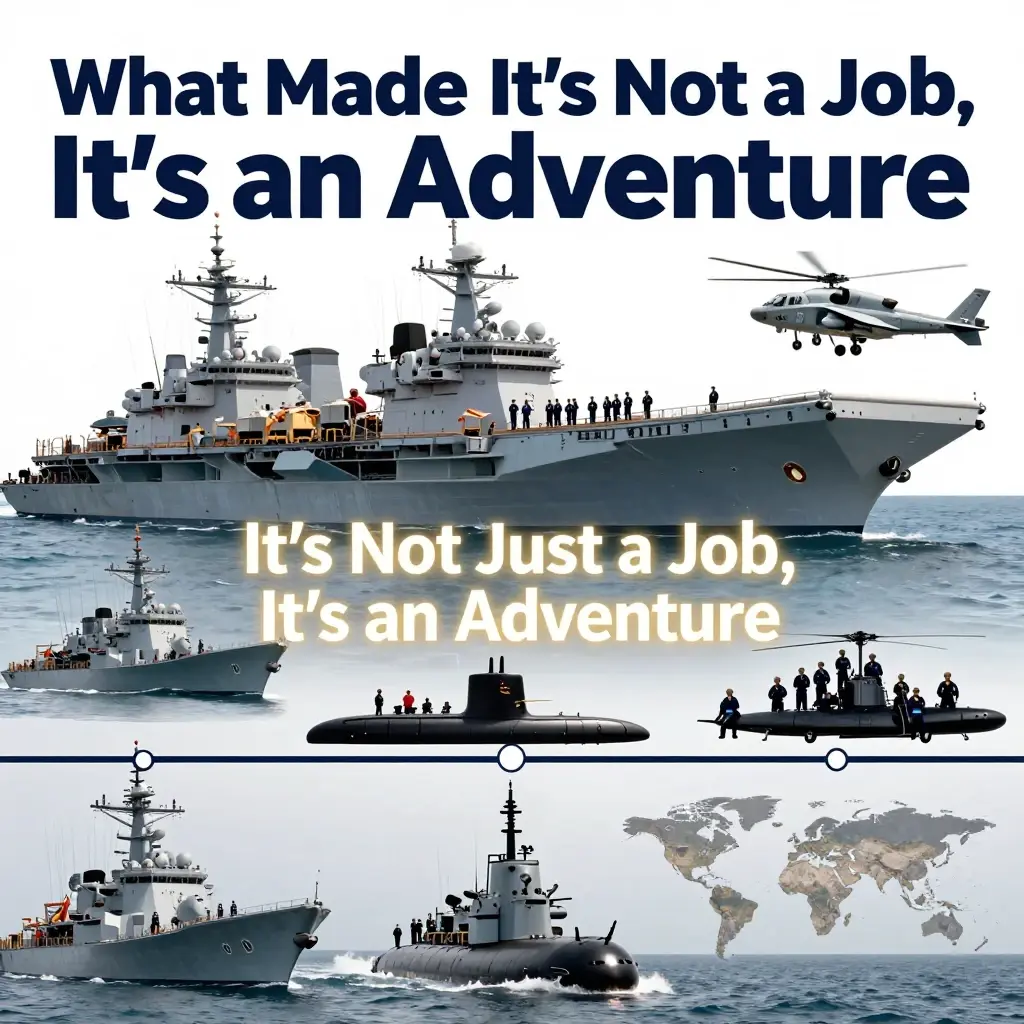
This might be the single most recognized military slogan in American advertising history, and it’s worth understanding why it still gets referenced in pop culture decades after it stopped airing.
- 🎬 It ran heavily during prime-time TV, embedding itself in mainstream culture, not just military circles
- ⚡ It reframed enlistment as excitement, not obligation — a huge shift in tone for the era
- 🧢 It appealed directly to young men in their late teens and early twenties weighing college versus service
- 🎵 The jingle itself became instantly hummable, which cemented recall
- 🌍 It quietly promised travel and novelty, echoing the earlier “See the World” era
- 😄 Comedians and parody accounts still reference it, which is a strange but real form of longevity
- 📺 It aired during a cultural moment when military pride was recovering post-Vietnam
- 🧠 Psychologically, it reframed structure and discipline as opportunity rather than restriction
- 💼 Recruiters say it’s still the phrase older veterans bring up unprompted in interviews
Breaking Down “Accelerate Your Life” — The Career-Focused Era
By the early 2000s, the Navy was competing with tech startups and college degrees for the same 18-to-24 demographic, and the slogan needed to speak directly to ambition rather than adventure.
- 🚀 The word “accelerate” borrowed language from tech and startup culture, not military tradition
- 📈 It positioned naval service as a career fast-track, with real job training attached
- 🎓 It directly targeted recruits who were weighing the Navy against a four-year degree
- 💻 Ads leaned into technical roles — nuclear engineering, aviation, cybersecurity — rather than combat imagery
- 🕒 It suggested naval service could compress a decade of civilian career growth into a few years
- 🧭 It shifted messaging from patriotism-first to self-improvement-first
- 💰 It quietly implied financial stability and skill-building, appealing to economically anxious families
- 🏗️ It coincided with a genuine expansion of technical training pipelines within the Navy
- 📊 Internal reviews credited it with boosting interest among recruits who’d never considered military service before
“A Global Force for Good” and the Humanitarian Reframe
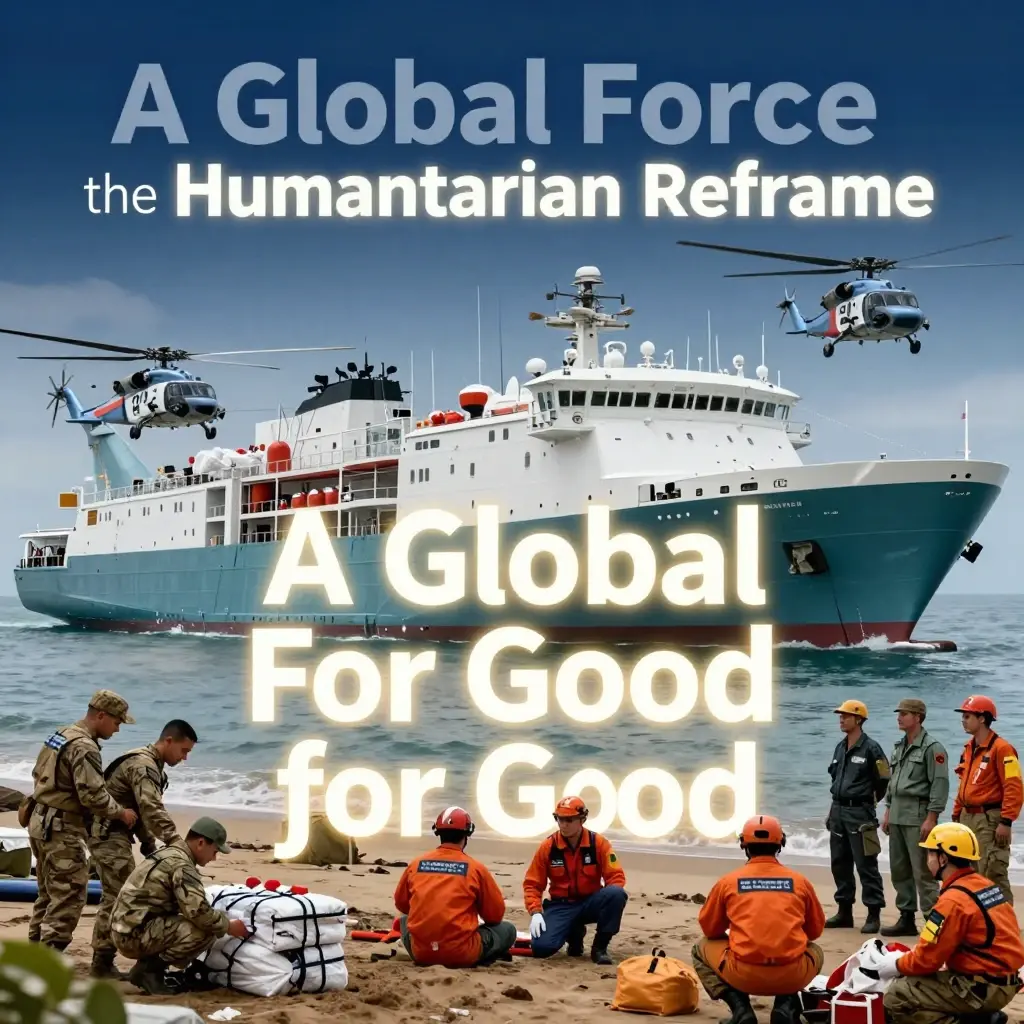
This slogan arrived at a moment when public opinion on military engagement was complicated, and the Navy needed language that separated its identity from combat alone.
- 🌐 It tied naval identity to disaster relief, humanitarian missions, and global stability
- 🏥 Campaigns highlighted hospital ships, evacuation missions, and international aid operations
- 🕊️ It softened the image of the Navy for audiences uneasy about active combat roles
- 👨👩👧 It appealed to parents, who often influence a young recruit’s decision more than any ad
- 🌎 It positioned the U.S. Navy as a stabilizing global presence, not just a fighting force
- 📰 It aligned messaging with real news coverage of Navy-led relief efforts after natural disasters
- 💬 Critics argued it undersold the Navy’s combat readiness — a tension that shaped the next rebrand
- 🎯 It performed well with recruits considering medical, logistics, and support roles
- 🧩 It remains one of the most debated slogans among Navy marketing historians, precisely because of that tension
Why “Forged by the Sea” Marked a Return to Grit
After years of softer messaging, this slogan swung the pendulum back toward toughness, resilience, and identity forged through hardship — language that resonated with a generation raised on true-crime docs and endurance-sport culture.
- ⚔️ It leaned hard into imagery of storms, steel, and physical endurance
- 🧗 It resonated with a cultural moment obsessed with grit, resilience, and mental toughness
- 🏋️ Campaigns featured real sailors describing genuinely difficult training moments, not polished perfection
- 🌊 The sea itself became a metaphor for transformation, not just a workplace
- 🎥 Commercials used documentary-style footage instead of glossy, scripted scenes
- 🧠 It tapped into the same psychology as CrossFit or Spartan Race marketing — struggle as identity
- 💬 It positioned the Navy as a place that builds character through hardship, not comfort
- 📊 It performed especially well with recruits already drawn to physically demanding careers
- 🔱 It’s the current umbrella slogan guiding most active U.S. Navy recruiting material
Navy Slogans vs. Other Branch Mottos — What Sets Naval Messaging Apart
Every branch fights for the same recruiting pool, so their slogans have to differentiate hard. Comparing them side by side shows how the Navy carved out its own emotional territory.
- ⚓ Navy slogans lean on water, distance, and vastness as core imagery — nobody else can claim that
- 🪖 Army slogans (“Be All You Can Be,” “Army Strong”) lean toward personal growth and strength
- ✈️ Air Force slogans (“Aim High,” “Above All”) lean toward elevation and technical mastery
- 🎖️ Marine Corps slogans (“The Few, The Proud”) lean toward exclusivity and elite identity
- 🌊 Navy uniquely owns the “unknown and vast” emotional territory — the ocean as mystery and challenge
- 🛠️ Navy messaging balances adventure and technical career development more evenly than other branches
- 🧭 The Navy’s global-deployment reality gives its slogans a built-in travel narrative others can’t match
- 💬 Cross-branch research shows recruits often compare slogans directly before choosing a branch
- 📊 Naval slogans historically perform strongest with recruits interested in engineering and technical trades
How Modern Navy Recruiting Slogans Are Actually Tested
Nobody just picks a phrase because it sounds good. There’s a genuine research process behind every official navy slogan, closer to consumer product testing than most people assume.
- 📋 Candidate slogans go through focus groups with the exact target demographic (usually 17-24 year-olds)
- 🧪 Phrases are A/B tested across digital ads before any TV budget is committed
- 📈 Recruiters track enlistment inquiry spikes tied to specific campaign language
- 🗣️ Feedback sessions with active-duty sailors help filter out language that feels inauthentic
- 💻 Social media sentiment is monitored closely once a slogan goes public
- 🎯 Marketing teams weigh memorability against accuracy — a catchy line that oversells service gets scrapped
- 🏛️ Department of Defense communications offices sign off before anything becomes official
- 📊 Post-campaign data is compared against retention rates, not just enlistment numbers
- 🔄 A slogan that tests well but underdelivers on real recruiting data typically gets replaced within a few years
The Psychology Behind Why Certain Navy Slogans Stick in Your Head
There’s real cognitive science behind why some lines lodge permanently in memory while others vanish the moment the ad ends, and it has less to do with cleverness than most people assume.
- 🧠 Short, rhythmic phrases activate what psychologists call the “chunking effect” in memory
- 🎵 Slogans paired with a melody or jingle get encoded far more durably than plain text
- 🔁 Repetition across multiple media types (TV, radio, print) builds what’s known as mere exposure familiarity
- 💭 Slogans that trigger imagery (the sea, adventure, transformation) are recalled more easily than abstract ones
- 🎯 Emotional resonance beats cleverness — a phrase that makes someone feel something outperforms wordplay
- 👥 Slogans reinforced by peer conversation (friends, family discussing it) get remembered longer
- 🧩 Simplicity wins — the most enduring Navy slogans are all five words or fewer
- 📺 Slogans anchored to a specific era’s cultural touchpoints become nostalgic time-capsules later
- 🗣️ People are far more likely to recall a slogan they can finish from memory than one they simply heard
What Makes a Navy Slogan “Good” From a Branding Standpoint
Not every catchy phrase makes an effective slogan. There’s a specific set of criteria branding professionals use to judge whether a military tagline is actually doing its job.
- ✅ Clarity — someone should understand the core message in under two seconds
- 🎯 Relevance — it has to reflect what naval service is actually like, not a fantasy version
- 💬 Brevity — the strongest examples rarely exceed five or six words
- 🔊 Rhythm — phrases with natural cadence are easier to recall and repeat aloud
- 🌊 Distinctiveness — it should be unmistakably naval, not generic military language
- 🧭 Longevity potential — good slogans age well and don’t feel dated within a year
- 💡 Emotional pull — it should spark curiosity, pride, or ambition, not confusion
- 🏛️ Institutional accuracy — it can’t overpromise on lifestyle, pay, or job guarantees
- 📊 Testability — it has to perform measurably better than the slogan it replaces
Beyond Recruiting — How Navy Slogans Shape Culture and Identity for Sailors Already Serving
Slogans don’t just recruit people — they follow sailors through their entire career, showing up on unit patches, coffee mugs, challenge coins, and reunion banners long after boot camp ends.
- 🎖️ Veterans often adopt their era’s recruiting slogan as a personal identity marker, long after leaving service
- ☕ Slogans show up informally on unit merchandise, mugs, and challenge coins
- 🗣️ Drill instructors and senior sailors sometimes reference old slogans to explain institutional values to new recruits
- 🧢 Slogan-era nostalgia is common at reunions and veteran gatherings, sparking shared memory
- 💬 Sailors frequently describe their slogan as the first thing that caught their attention before enlisting
- 🏅 Some commands informally revive retired slogans for morale campaigns or anniversary events
- 📚 Naval historians treat slogan evolution as a legitimate lens for studying military culture shifts
- 👨👩👧👦 Multi-generational Navy families often compare which slogan each generation served under
- 🌊 Ultimately, the slogan becomes shorthand for an entire chapter of someone’s life, not just an ad campaign
FAQs:
What is the current official U.S. Navy slogan?
“Forged by the Sea” is the primary recruiting slogan currently used by the U.S. Navy, in active use since 2019.
What was the most famous Navy slogan of all time?
“It’s Not Just a Job, It’s an Adventure,” used through the 1970s and 80s, is widely considered the most recognized and quoted Navy slogan in American advertising history.
What does “Forged by the Sea” mean?
It’s a metaphor comparing naval training and service to a forging process — implying that sailors are shaped, toughened, and transformed through the challenges of service at sea.
Is “Accelerate Your Life” still used by the Navy?
No, it was retired in favor of “A Global Force for Good” and later “Forged by the Sea,” though it’s still remembered fondly by recruits from its era.
What’s the Navy’s official Latin motto?
“Non sibi sed patriae” — meaning “not for self, but for country” — is a longstanding motto tied to naval tradition, separate from public-facing marketing slogans.
How often does the Navy change its recruiting slogan?
Historically, official slogans have run anywhere from 5 to 15 years before being retired or refreshed based on recruiting performance and cultural shifts.
Who creates Navy recruiting slogans?
They’re developed through a combination of Navy marketing offices, contracted advertising agencies, and Department of Defense communications teams, then tested extensively before release.
Why did the Navy retire “A Global Force for Good”?
While it resonated with humanitarian-minded recruits, critics felt it underemphasized combat readiness, contributing to a strategic pivot toward the grit-focused “Forged by the Sea” campaign.
What makes a military slogan effective for recruiting?
Clarity, brevity, emotional resonance, and accuracy about the actual experience of service — slogans that overpromise tend to hurt long-term retention even if they boost short-term enlistment.
Are Navy slogans different from Navy SEAL slogans?
Yes. General Navy recruiting slogans target the broad service, while Navy SEAL messaging (like “The Only Easy Day Was Yesterday”) is a distinct, unofficial cultural phrase tied specifically to special operations identity.
Does the Navy test slogans before releasing them publicly?
Yes, extensively — through focus groups, digital A/B testing, sentiment tracking, and feedback from active-duty sailors before any slogan becomes an official campaign.
Why do old Navy slogans still show up on merchandise and social media?
Because slogans become tied to personal and generational identity for veterans, they often get informally revived on apparel, challenge coins, and nostalgia-driven social content long after retirement.
Conclusion:
A navy slogan might look like a simple marketing line at first glance, but as you’ve seen, each one carries real strategy, real cultural context, and real weight for the people who served under it.
From “See the World” to “Forged by the Sea,” these phrases track America’s shifting relationship with military service what it promises, what it demands, and what it means to answer that call.
If you’re researching naval history, studying military branding, or just trying to place the jingle stuck in your head, hopefully this cleared up exactly where it came from and why it worked.
Got a slogan era you remember that wasn’t covered here?
Drop it in the comments chances are, someone else is trying to place it too.

Benjamin Collins is a branding researcher who explores the psychology behind memorable slogans and successful brand identities.